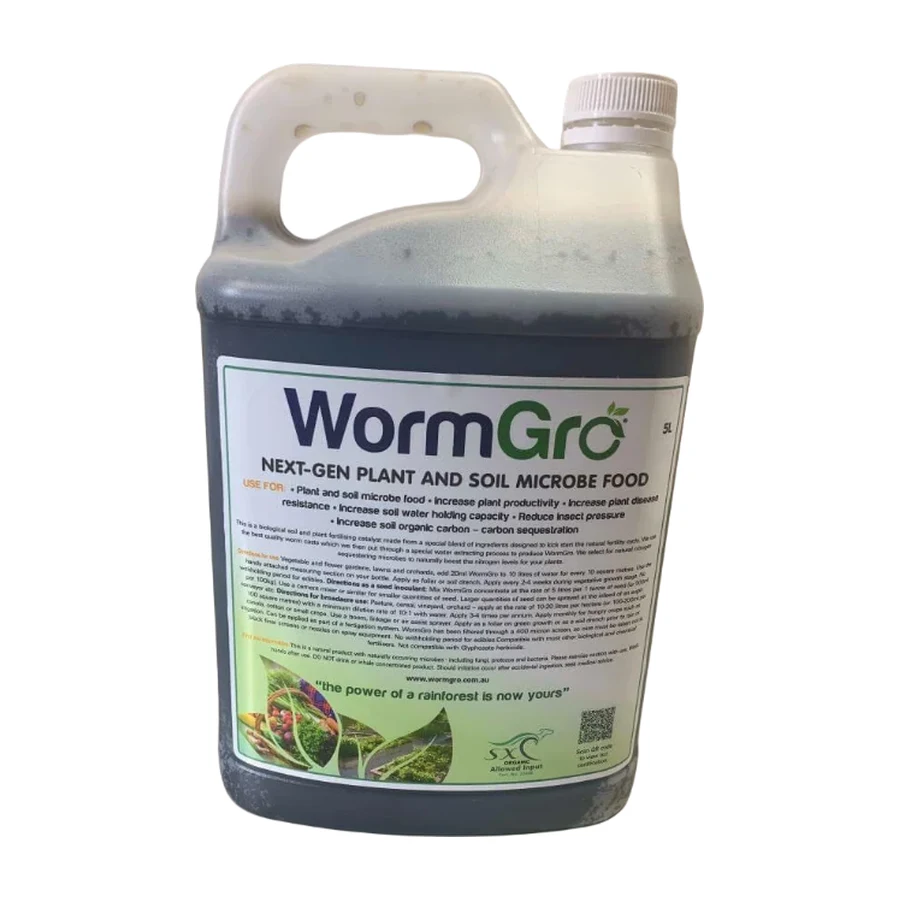
Worm cast liquid · Certified organic
WormGro
The original worm cast liquid
From$29.70
Down to $4.78 a litre by the 1000L shuttle
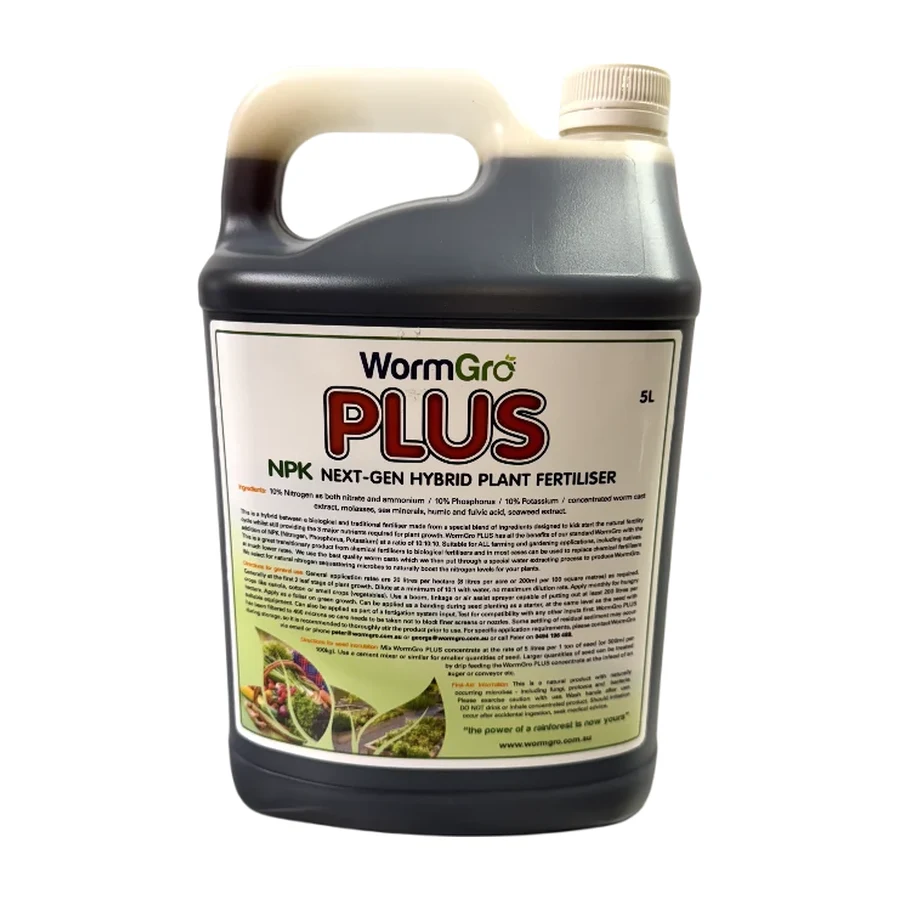
Biological fertiliser · 10:10:10 NPK
Biological 10:10:10 for farms cutting back on synthetics
The same microbial diversity as WormGro with a balanced 10:10:10 NPK. The microbes chelate the nutrients, so nearly all of it is plant-available instead of leaching or volatilising. Cut synthetic fertiliser without dropping yield.
One 5L drum covers about
Per application, at the label rate.
Bulk order or a freight question? Call George on 0427 573 424
What it is
Conventional NPK feeds the plant and loses a large share of itself to the air, the water table and the soil chemistry on the way. Plus wraps the same major nutrients in a living microbiome. The microbes hold the nutrients in chelated form, release them as the plant asks, and get on with rebuilding the soil while they do it. At Wodonga it matched 100kg/ha of urea on ryegrass at a lower cost.
Minimum 10:1 with water. There is no maximum dilution rate.
Where the nutrient goes
Conventional NPK loses a large share of itself before the plant ever sees it. Plus wraps the same nutrients in a living microbiome that holds them until the crop asks.
Conventional NPK
A share of urea nitrogen is lost to the air before it reaches a root.
Soluble nutrient moves past the root zone with the next rain or irrigation.
Phosphorus binds in the profile, where the soil test sees it and the plant cannot.
WormGro Plus
The nutrients are bound to living biology, not left soluble in the soil water.
Roots signal, microbes deliver. Nothing is dumped in one hit.
Nearly all of what goes on the paddock ends up in the crop. That is why less is needed.
The program
First foliar pass at 20 L/ha once the crop is up and photosynthesising.
Canola, cotton and small crops take a pass a month through the season.
Put the nutrients and the biology in the furrow with the seed.
Filtered to 400 microns, so it runs through pivots and drip lines.
Sizes and prices
Every size is the same brew at the same strength. Pick the one that matches the ground you have to cover, or add a mix of sizes straight from the table.
| Size | Per litre | One covers about | Price | Add to cart |
|---|---|---|---|---|
5L drum $87.00 $17.40/L · 0.25 ha (foliar) | $17.40 | 0.25 ha (foliar) | ||
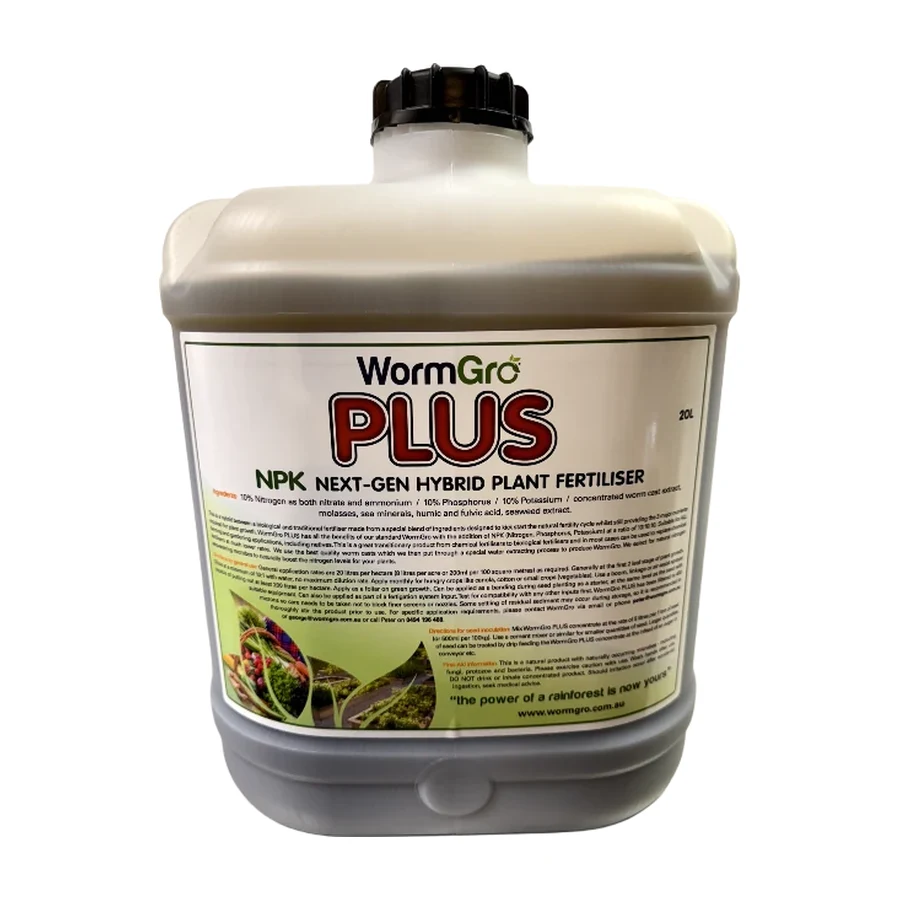 20L drum $307.00 $15.35/L · 1 ha (foliar) | $15.35 | 1 ha (foliar) | ||
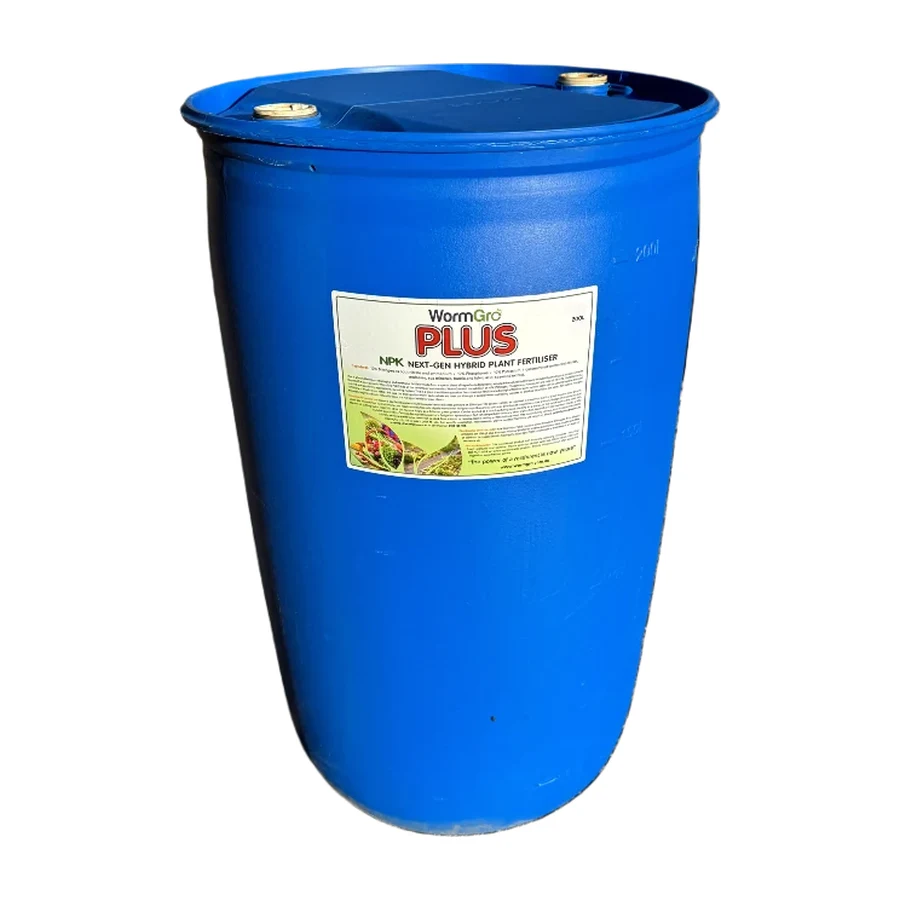 200L drum $1,977.00 $9.89/L · 10 ha (foliar) | $9.89 | 10 ha (foliar) | ||
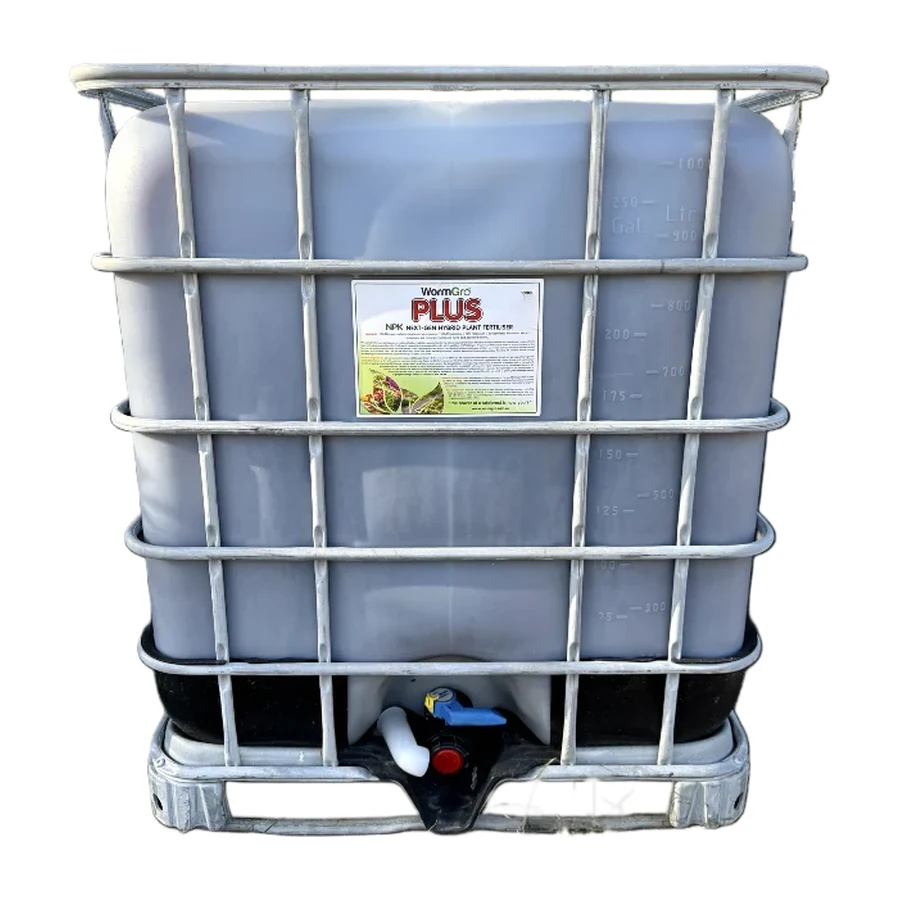 1000L shuttle $6,777.00 $6.78/L · 50 ha (foliar) | $6.78 | 50 ha (foliar) |
Rates and directions
Minimum 10:1 with water. There is no maximum dilution rate. Seed: 5L per tonne of seed (500ml per 100kg), by cement mixer or drip-fed at the auger infeed.
| Use | Rate |
|---|---|
| General foliar rate8 L per acre, or 200ml per 100m². Generally from the first two-leaf stage. | 20 L/ha |
| Follow-up applicationsBoom, linkage or air-assist sprayer putting out at least 200 L/ha. | Monthly or as required |
| Starter at plantingWith suitable equipment. | Banded at seed level |
| FertigationTest compatibility with other inputs first. | As a system input |
Stir thoroughly before use; some sediment settles in storage
Filtered to 400 microns, so watch finer screens and nozzles
Keep spray pressure under 80 psi to protect the biology
Jar test before mixing with other liquid inputs
In the paddock

“I put MAP and Calciprill on both plots. One got 100 kg of urea per hectare and the other WormGro Plus. The results were just as good with WormGro, but it worked out a lot cheaper.”
Ryegrass pasture · 4ha · 2 x 5L/ha WormGro Plus foliar
Matched urea at lower cost
Complete the program
Worm cast liquid · Certified organic
The original worm cast liquid
From$29.70
Down to $4.78 a litre by the 1000L shuttle
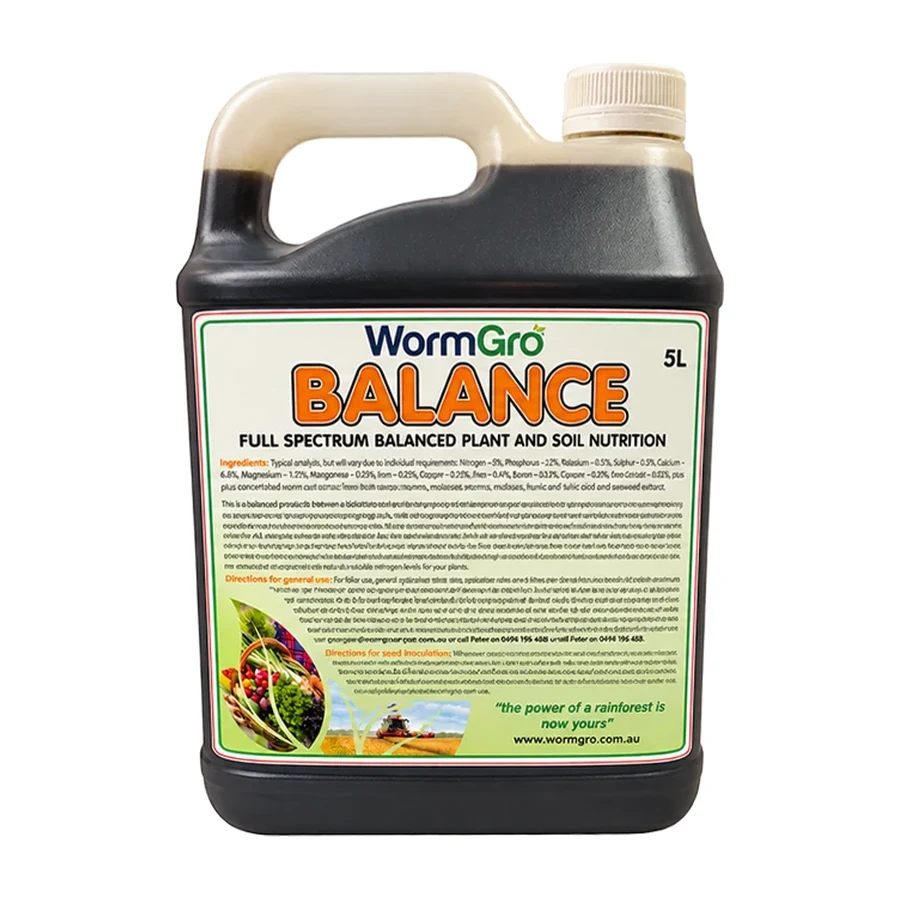
Hybrid fertiliser · Minerals plus microbes
Full-spectrum hybrid: minerals plus microbes
From$77.00
Down to $6.38 a litre by the 1000L shuttle
Live biology · Dry product
Seed the workforce itself
From$550.00
20kg pack covers up to 5 hectares
WormGro Plus questions
Same brew, same million-plus microbial species, with a balanced 10:10:10 NPK added for crops that need major nutrients straight away. Think of it as WormGro that went to agricultural college: the biology repairs the soil while the NPK carries the crop while you cut back on synthetics.
Yes. At Wodonga, James Wallace put MAP and Calciprill on both ryegrass plots, then 100kg/ha of urea on one and two 5 L/ha passes of Plus on the other. Same result, lower cost. Most growers start by supplementing at least half their urea with Plus and taper from there.
20 L/ha as a general rate, which is 8 L/acre or 200ml per 100 square metres, from the two-leaf stage onward. Hungry crops like canola, cotton and small crops take it monthly. It can also be banded at planting or run through fertigation.
A minimum of 10 parts water to 1 part Plus, so a 20 L/ha pass goes on in at least 200 litres of water per hectare. More water does no harm; less risks the biology and the nozzles.
MAP and Calciprill went on alongside Plus in the Wodonga trial without trouble. Jar test any new combination first: if the jar precipitates, the mix will block nozzles and screens and the biology will not survive it.
Any crop where you want to cut synthetic fertiliser but cannot afford a yield dip: pasture, cereals, canola, cotton and vegetable crops. If a soil test shows specific mineral deficits rather than a general nutrient need, WormGro Balance is the better fit.
Order or ask
Tell George the crop, the hectares and what you put on now. He will come back with a Plus program, a per-hectare price and a strip-trial layout so you can prove it on your own ground before you commit the block.