How it works
Feed the soil.It feeds the plant.
Synthetic fertiliser feeds the plant directly and leaves the soil out of the loop. WormGro puts over a million microbial species back into the root zone, and they do what biology has always done: fix nitrogen, free bound minerals, build structure and hold water.
- 1,000,000+ microbial species
- 14,000+ ppm nitrogen from nitrogen-fixing microbes
- Up to 80 chelated minerals
- Made on Soil Food Web principles
From castings to drum
Brewed from castings, not drained off a worm bed.
Worm juice is what runs out the bottom of a worm farm. WormGro is a different thing: finished castings, multiplied through a brew, checked before release.
Castings
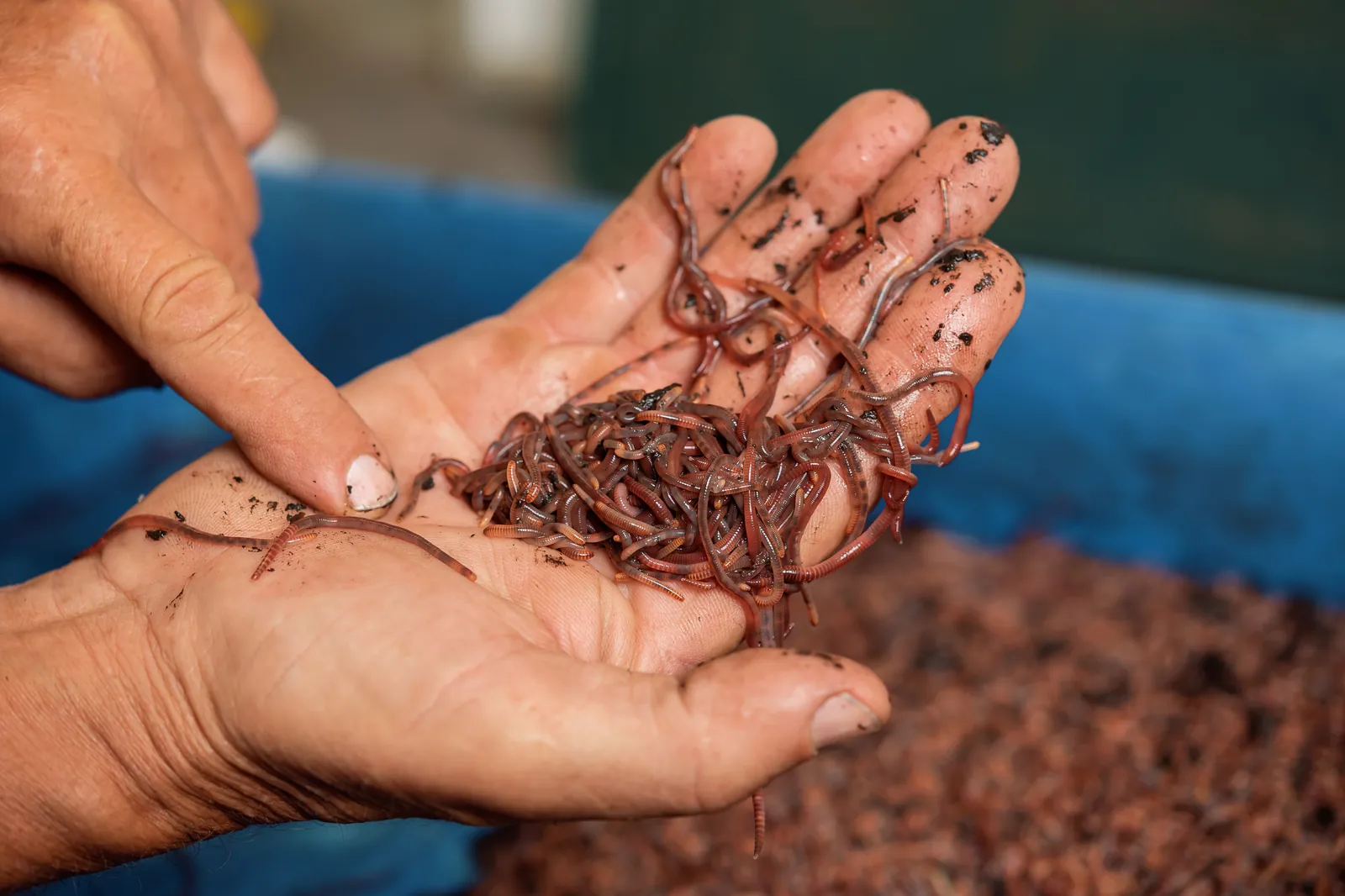
High quality castings from the worm beds at Gin Gin, the richest biological material there is.
Brew
A proprietary brew multiplies the bacteria, fungi and protozoa rather than just washing them out.
Check
Every batch is analysed under the microscope to confirm the organisms are present and active.
Ship
Filtered to 400 microns and drummed. Twelve to twenty-four months of shelf life, cool and shaded.
In the root zone
Four jobs the soil takes back once the biology is home.
These are not promises. Each one has a line in the trial tables.
Nitrogen from the air
Nitrogen-fixing bacteria turn atmospheric nitrogen into plant food. Soil N doubled in the capsicum trial.
Bound phosphorus freed
Microbes unlock the P already in your profile. Soil P went from 20 to 39, and root systems grow to match.
Minerals delivered
Up to 80 chelated minerals carried into the plant and the produce, where a soil test cannot see them but Brix can.
Water held, not lost
Aggregates form around fungal threads and bacterial glues. A University of Queensland study found worm products cut irrigation by up to 50%.
Carbon in a season
Roughly 30% of what a plant photosynthesises goes down, not up.
Plants pump about a third of the carbon they capture out through their roots as sugars to feed soil life. With a working microbiome that carbon is stabilised as humus. Without one, it is lost. WormGro is how you make sure it has somewhere to go.
+10%
Soil carbon in one five-month capsicum crop, 1.0% to 1.1%
5.8 to 9.8
Cation exchange capacity on the same block, the soil's capacity to hold nutrients
What the plant does with it
Higher Brix, bigger roots, fewer problems.
A plant on a living soil is a different plant: sweeter sap, a deeper root system and a canopy that pests and disease pass over.
Yield
10% to 50% more fruit and vegetables, and up to 25% more yield over traditional fertiliser in comparative field trials.
Pest and disease pressure
Higher Brix and a competitive microbiome. In ginger, rhizomes infected with pythium fell 55% and leaf infection went from 15.3% to 1.98%.
Weed suppression
Observed in capsicum, tomato and giant rat's tail grass trials, as the soil stops favouring the pioneers.
Why the label is fussy
You are spraying something alive.
Every application rule on a WormGro drum comes back to one idea: the organisms have to reach the soil alive and in numbers.
Late afternoon or evening
Ultraviolet light kills microbes. Give them the night to move into the soil.
Under 80 psi
Low-pressure, high-flow nozzles. Shear kills organisms as surely as sunlight does.
Jar test tank mixes
Some chemistry precipitates the biology. If the jar clouds or drops out, so will your nozzles.
Cool, shaded, never frozen
Twelve to twenty-four months of shelf life if the drum is treated like the living thing it is.
The science, asked plainly
Microbes, nitrogen, clay and timing.
Both, which is the point. It carries nutrition, including more than 14,000 ppm of nitrogen and up to 80 chelated minerals, and it carries the biology that keeps producing nutrition after the drum is empty. A bag of fertiliser does the first job once. The microbes do it every day.
Certain bacteria fix nitrogen straight from the air and hand it to plant roots in exchange for sugars. WormGro is brewed to be rich in them, which is where its 14,000 ppm nitrogen fraction comes from, with no urea added. The fertility cycle runs on the paddock instead of in a factory.
The network of bacteria, fungi, protozoa, nematodes and larger soil animals that cycles nutrients between soil and roots. Dr Elaine Ingham's work describes it, and WormGro is made on those principles: a complete, diverse community applied to the root zone rather than a single strain or a soluble salt.
Yes. The mechanism is the same in both: microbes glue particles into aggregates. In sand that means water and nutrients are held instead of draining through; in clay it means air and water can get in. The lucerne record on the results page is on black clay; the capsicum trial was on cropping ground.
Faster than most people expect. In the 2021 capsicum trial soil carbon rose from 1.0% to 1.1% and cation exchange capacity from 5.8 to 9.8 inside one five-month crop cycle. Structure and water holding keep improving as long as the biology is fed.
Ultraviolet light kills microbes. Putting WormGro on late afternoon or evening gives the biology the night to move off the leaf and into the soil. For the same reason, keep pressure under 80 psi and use low-pressure, high-flow nozzles so the organisms arrive alive.
Put it to work
Pick the product for your ground. The biology is the same.
WormGro for biology, Plus for farms cutting back on urea, Balance for a soil test with deficits, and earthworm eggs to make the change permanent. Or tell George what you grow and let him pick.