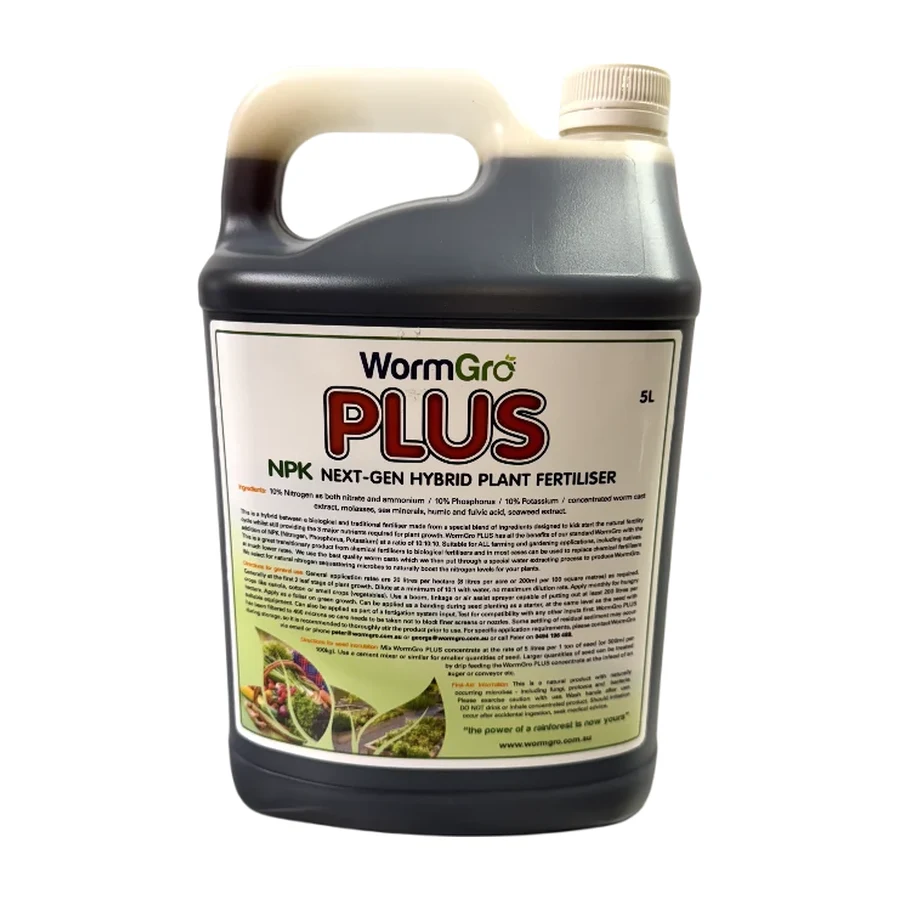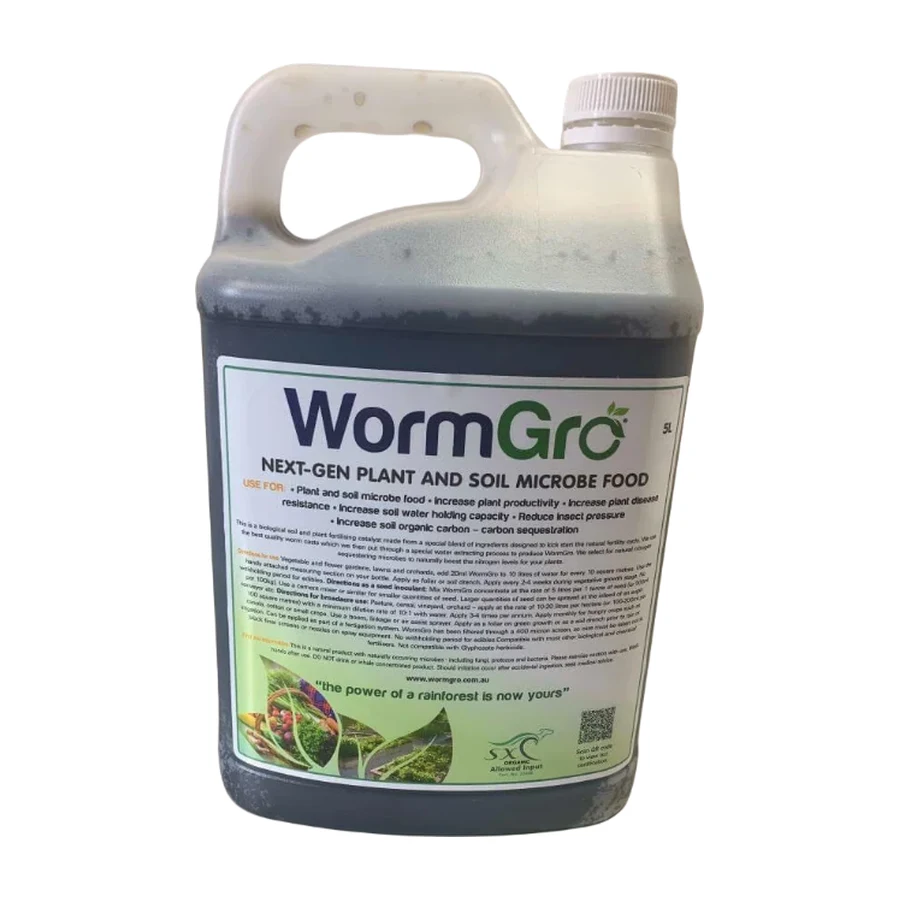
Worm cast liquid · Certified organic
WormGro
The original worm cast liquid
From$29.70
Down to $4.78 a litre by the 1000L shuttle
Live biology · Dry product
Seed the workforce, not just the feed
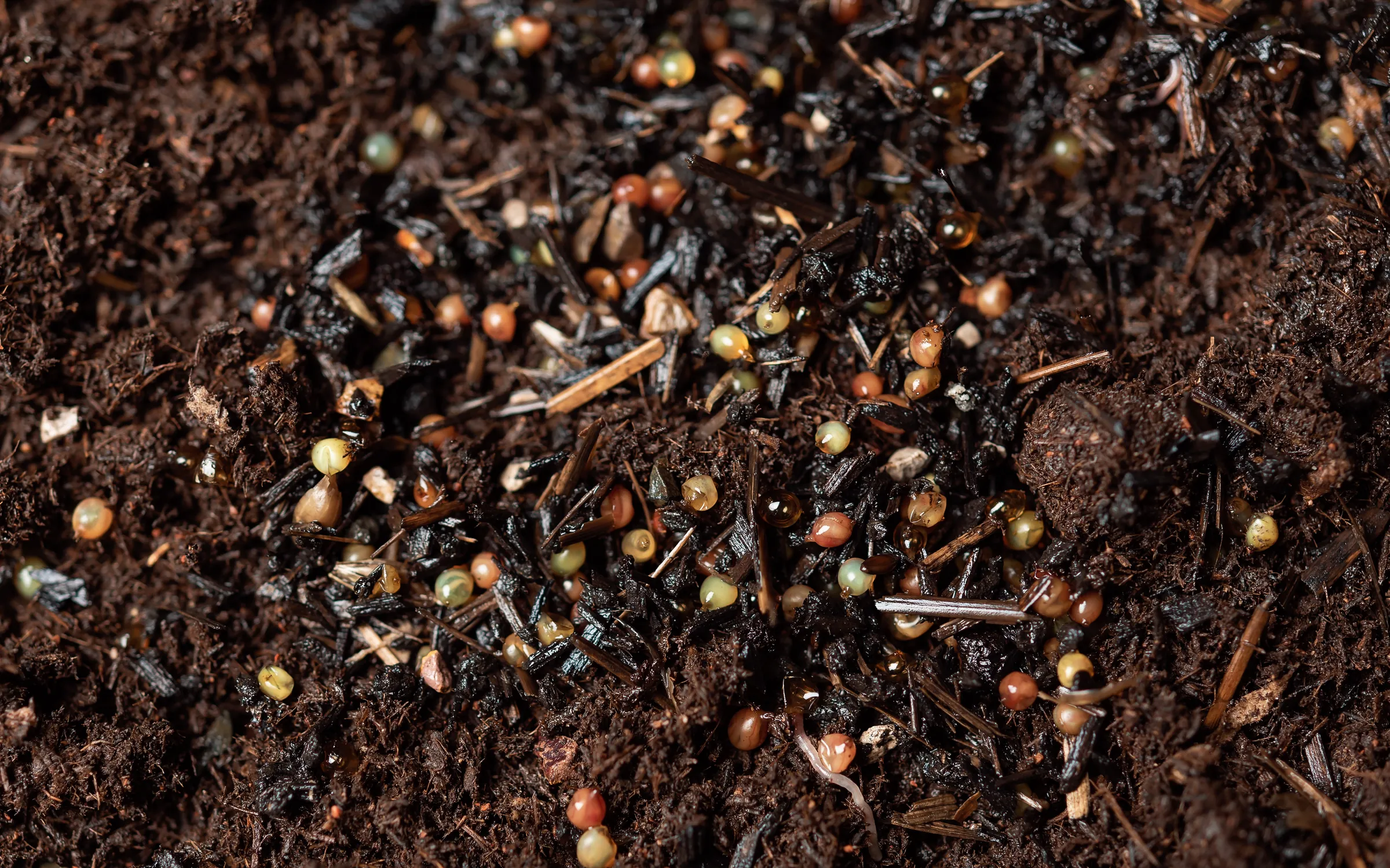
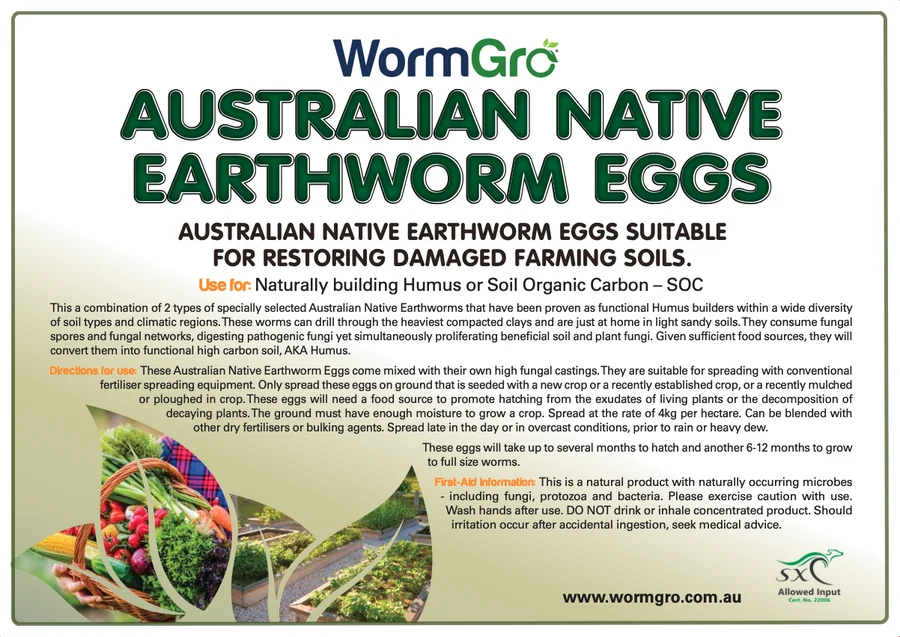
Two selected native species, supplied as eggs pre-mixed in high-fungal castings. Spread 4kg per hectare with the gear you already own, and the population builds for years: drilling channels through clay and sand, eating pathogenic fungi and turning residue into humus.
Pack: 20kg
Coverage
Bulk order or a freight question? Call George on 0427 573 424
Why earthworms
WormGro puts the microbes back. Native earthworms give them a permanent home: burrows for air and water, castings for nutrients, and a workforce that breeds itself.
They drill through heavy clay and sandy soils alike, opening channels that let rain in and roots down.
Every pass through the gut shifts the balance in the soil toward the fungi that feed plants, not the ones that rot them.
Mulch, stubble and manure become castings, the richest soil there is. The population grows as long as there is residue to feed it.
20kg pack, pre-mixed in high-fungal castings. Price includes GST.
How to spread it
No new gear and no new job. The eggs go out the way your dry fertiliser does, and the timing is the only thing to get right.
Late in the day or under cloud, ideally with rain or dew on the way. Onto recently seeded, mulched or ploughed-in ground so the hatchlings have cover and food.
A conventional spreader does the job. Blend the pack with your dry fertiliser if you are going out anyway; the eggs ride along without harm.
Hatching within several months, full size at 6 to 12 months, casting piles on the surface at 6 to 9 months. Store unused packs cool and shady for up to 6 to 8 weeks.
The population curve
Earthworm numbers roughly double every three to four months in good conditions. This is the projection Kookaburra Worm Farms publishes for a single application at 4kg per hectare.
3 months
4,000
worms per hectare
6 months
16,000
worms per hectare
9 months
32,000
worms per hectare
12 months
64,000
worms per hectare
21 months
1,024,000
worms per hectare
Projection as published by Kookaburra Worm Farms. Bars are illustrative, not to scale.
What the research says
The figures Kookaburra Worm Farms cites when growers ask whether earthworms are worth the trouble.
70 to 80%
Initial lift in pasture growth after earthworms were introduced, in New Zealand and Tasmanian research reported by NSW DPI.
25%
The long-term pasture growth advantage in the same research, once populations had settled.
7 million
Worms per hectare that established populations reached in that research.
300 t/ha
Castings a year from 25 worms per shovelful of soil, worth around $30,000 in fertiliser value, as estimated by agronomist Graeme Sait.
Where they belong
Earthworms need their burrows left alone. Where the ground is worked hard every season, the population never gets ahead.
Give the worms a head start
The liquid puts the microbes back so the hatchlings land in living soil. Most growers start both in the same season.
Worm cast liquid · Certified organic
The original worm cast liquid
From$29.70
Down to $4.78 a litre by the 1000L shuttle
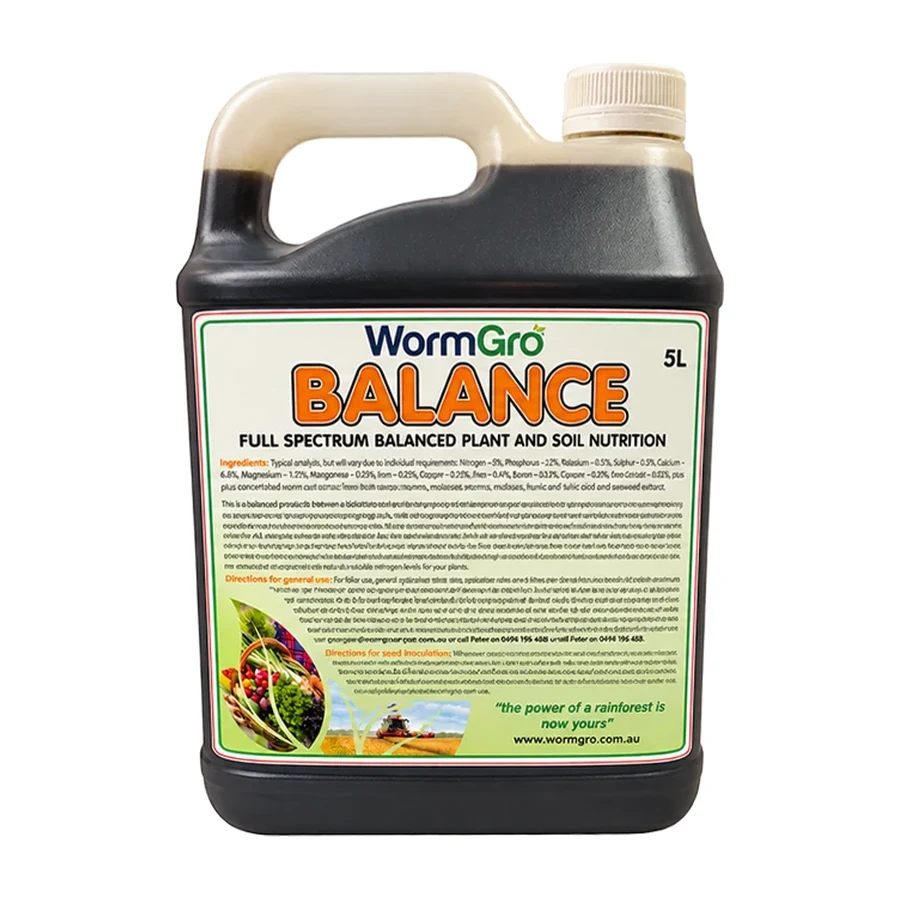
Biological fertiliser · 10:10:10 NPK
Biological 10:10:10 for farms cutting back on synthetics
From$87.00
Down to $6.78 a litre by the 1000L shuttle
Hybrid fertiliser · Minerals plus microbes
Full-spectrum hybrid: minerals plus microbes
From$77.00
Down to $6.38 a litre by the 1000L shuttle
Earthworm questions
Eggs are dormant, so they store and travel well and hatch in the soil they are going to live in once there is food for them: the exudates of living plants or decaying plant matter. Keep the pack in a cool, shady place for up to 6 to 8 weeks and use it within 3 months of arrival.
Eggs hatch within several months of spreading and the worms reach full size at 6 to 12 months. Casting piles on the surface, the sign the population is established and working, typically appear 6 to 9 months after application.
Yes. The eggs come pre-mixed in high-fungal castings and can be blended with dry fertilisers and put out through a conventional spreader. Spread late in the day or on an overcast day, ideally before rain or dew, onto recently seeded, mulched or ploughed-in ground.
The two species were selected for Australian conditions and drill through heavy clay and sandy soils alike. They do best under pastures, orchards and low-till cropping. Intensive tillage keeps destroying their burrows and sets the population back, so it is not the right system for them.
Earthworm populations roughly double every three to four months in good conditions. The projection from a single 4kg per hectare application published by Kookaburra Worm Farms runs from 4,000 worms per hectare at three months to over a million at 21 months.
One 20kg pack covers up to 5 hectares at the 4kg per hectare rate. A kilogram of eggs holds roughly 1,000 eggs. Larger areas simply take more packs; talk to George about staging a bigger program across seasons.
Start the population
Hectares, soil type and how the ground is managed. George will size the order, suggest the timing for your district and pair it with a WormGro program if the biology needs a head start.